CALL TODAY
(07) 3741 2825

Endometriosis & Nutrition: Is Your Diet Helping Or Hurting?

Blog written by Janice Law

March marks Endometriosis Awareness Month, making this the perfect time to shed light on this condition that affects millions of people worldwide.

Endometriosis is still widely misunderstood, often leaving many people confused about their symptoms and uncertainties about how to manage it. One common struggle is wondering if the food they eat is helping or worsening their symptoms.
This is completely understandable, especially considering the lack of conversations and the amount of conflicting information online.

What is Endometriosis?

Endometriosis is a chronic inflammatory condition, in which the tissue similar to the lining of the uterus grows outside to other areas of the body ₁ . It can cause debilitating pain and discomfort, and may also impact fertility for some.

Common symptoms include ₁, ₂
– Bloating, constipation, and diarrhoea
– Heavy or irregular bleeding
– Period pain
– Abdominal, back, and pelvic pain
– Pain when doing a wee or a poo
– Difficulty falling pregnant
– Fatigue

Who Does It Affect?

Endometriosis currently affects 1 in 7 people assigned female gender at birth in Australia ₃. It is actually a lot more common than we think.

Diet & Endometriosis

With that in mind, let’s dive into the key nutrients that play a crucial role in endometriosis management, along with food to avoid. This will help you make more informed and sustainable dietary choices to support Endometriosis management and
overall well-being in the long run.

Food To Include More Often

I. Healthy fats
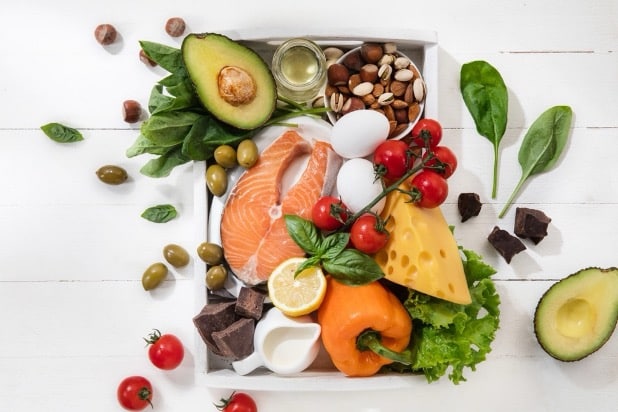
Food sources: salmon, tuna, walnuts, flaxseeds; avocado

As we mentioned before, Endometriosis is an inflammatory condition. Omega-3 fatty
acids play a key role in reducing inflammation ₄.

Fatty fish like salmon and tuna, along with nuts and seeds, such as walnuts and flaxseeds, are great sources of omega-3 to achieve an anti-inflammatory diet. Monounsaturated foods, such as avocado, help reduce the ‘bad’ cholesterol – LDL,while increasing the ‘good’ cholesterol – HDL. These foods also have a great anti-inflammatory effect.

Monounsaturated foods, such as avocado, help reduce the ‘bad’ cholesterol – LDL, while increasing the ‘good’ cholesterol.

II. Whole fruits
III. Vegetables, specifically dark leafy greens

Food sources: kale, spinach, broccoli, collard greens

Oxidative stress is a common term mentioned in Endometriosis. This means that there is an imbalance between antioxidants and harmful particles in our body, which is called the reactive oxygen species (ROS) ₅. This imbalance can contribute greatly to inflammation and the progression of Endometriosis.
Whole fruits and vegetables, specifically dark leafy greens, are packed with fibre and antioxidants, which help reduce oxidative stress. They also contain some crucial vitamins and minerals, such as magnesium and iron, which is particularly important for Endometriosis management.

IV. Whole grains
Food sources: oats, brown rice, whole wheat bread/pasta/wrap

Compared to refined grains like white rice and white bread, whole grains contain a higher level of antioxidants, fibre, and phytonutrients, that help lower inflammation and manage Endometriosis.

V. Dairy ₆
Food sources: milk, cheese, and yoghurt

Many people think dairy must be avoided with Endometriosis, as it’s often linked to bloating and stomach issues.
Actually, dairy products contain high levels of calcium and vitamin D, which also have an inflammatory effect ₆!

While dairy can cause issues in some people, others may tolerate them rather well and it helps alleviate their symptoms.
Again, it is important to listen to your body and best to reach out to our dietitian for personalised guidance on dairy consumption to support your management.

VI. Low-FODMAPs food

FODMAP stands for “Fermentable Oligosaccharides, Disaccharides, Monosaccharides and Polyols”. These are types of carbohydrates that are poorly absorbed in the small intestine, often causing gas production, bloating, and pain.

If you have Endometriosis and experience changes to bowel habits, such as constipation or diarrhoea, you may benefit from trying the FODMAP protocol ₇. It helps reduce the consumption of fermentable sugars in our diet and identify the food that may trigger inflammation and symptoms. This may slow the progression of Endometriosis in women.

For more information about FODMAPs, visit the Monash FODMAP website.
Before adopting the FODMAP protocol, it is important to consult with a dietitian for guidance to ensure you’re not removing too much food and are still getting enough nutrients and fibre. I can help you manage your symptoms while maintaining a balanced diet.

VII. Smart tip –Swapping your cooking oil to extra virgin olive oil (EVOO) ₈

Besides what we eat, how we cook also plays a significant role in Endometriosis management. Small changes in our cooking style also have a big effect on our whole diet!
EVOO has been shown to have an anti-inflammatory and antioxidant effect. Try using it over salad, for roasting, grilling, or just cooking in general!

Food to Watch Out For

I. Processed food ₉
Food sources: fast food, fried food, ice cream

Many processed foods contain ingredients that worsen inflammation, such as saturated fat, trans fat, and added sugar.

II. Refined sugar
Food sources: soft drinks, energy drinks, juice with added sugar

Excessive intake of dietary sugar can increase the numbers of inflammatory mediators and some pro-inflammatory cytokines in our body ₁₀ — proteins that regulate immune response and inflammation.

Over time, an increase in sugar intake can cause chronic inflammation. Some artificial sweeteners may also disrupt gut health.

III. High-GI food
Food sources: white bread, white rice, refined pasta, breakfast cereal, processed snacks like chips

Food with a high glycaemic index (GI) may lead to a rapid blood sugar spike, which increases insulin levels and worsens inflammation.

IV. Red meat ₁₁
Food sources: beef, lamb, pork

High intake of red meat has been associated with increased risk and worsening progression of Endometriosis.

V. Alcohol ₁₂ – interferes with Estrogen production

More information

Below are some helpful websites to learn more about managing Endometriosis.

1. Endometriosis Australia: An Australian charity providing resources for understanding Endometriosis and exploring various related blogs https://endometriosisaustralia.org

2. The Endometriosis Foundation of Australia: Providing resources and education around Endometriosis https://www.endofound.org

3. Monash Australia: Provide detailed resources and information about low-FODMAP diet
https://www.monashfodmap.com

Food is a Powerful Tool

Although Endometriosis currently has no cure, the right foods can help alleviate these symptoms! It is all about swapping and replacing our food choices with smarter ones. If you’re seeking more personalised dietary advice tailored to your endometriosis management, our dietitian are here to guide you. Book a consultation with us today and take charge of your health using the power of food!

Disclaimer: This informaCon is NOT medical advice and is for informaConal purposes only. It is is not intended to replace personalised medical or dieteCc advice.

If you’re seeking more personalised dietary advice tailored to your endometriosis management, I’m here to help. Book a consultation with us today and take charge of your health using the power of food.

We are also hosting free monthly nutrition education group session. Topics covered throughout the year include:

–       Australian Guide to Healthy Eating (AGHE);

–       Healthy Supermarket Shopping;

–       Budget-Friendly + Nutritious Recipes;

–       Eating for heart health;

–       Protein & Muscle Health;

–       Understanding ultra-processed foods;

–       Common nutrition myths and misinformation;

–       And more!

Whether you’re looking to expand your nutrition knowledge or learn simple strategies to improve your eating habits, these sessions are a great way to gain practical tips in a supportive environment.

Click the link below to register your spot for an upcoming session.


Reference

1. Endometriosis Australia. Your Guide to Endometriosis [Internet]. Endometriosis Australia; 2026 [updated 2026, cited 2026 Mar 5]. Available from: https://endometriosisaustralia.org/understanding-endometriosis/

2. Jean Hailes for Woman’s Health. Endometriosis Symptoms & Causes. [Internet]. Jean Hailes for Woman’s Health; 2024 [updated 2024, cited. 2024 Mar 12] Available from: https://www.jeanhailes.org.au/health-a-z/endometriosis/symptoms-causes#symptoms

3. Australian Institute of Health and Welfare (AIHW). Endometriosis [Internet].
Australian Government (AU): AIHW; 2024 [updated 2023; cited 2025 Mar 12].

Available from https://www.aihw.gov.au/reports/chronic-disease/endometriosis-in-australia/contents/summary

4. Akyol A, Şimşek M, İlhan R, et al. Eoicacies of vitamin D and omega-3polyunsaturated fatty acids on experimental endometriosis. Taiwanese journal of obstetrics & gynecology. 2016;55(6):835-839. doi:10.1016/j.tjog.2015.06.018

5. Nappi L, Volta CA, Spadaro S, et al. Oxidative Stress and Endometriosis: A Systematic Review of the Literature. Oxidative medicine and cellular longevity. 2017;2017(2017):1-7. doi:10.1155/2017/7265238

6. The Dietologist. What is the best diet for endometriosis? [Internet]. The Dietologist; 2025 [cited 2025 Mar 12]. Available from: https://thedietologist.com.au/best-diet-for-endometriosis/

7. The Dietologist. Eating for endometriosis? [Internet]. The Dietologist; 2025 [cited 2025 Mar 24]. Available from: https://thedietologist.com.au/eating-for-endometriosis/

8. Chiang YF, Hung HC, Chen HY, et al. The inhibitory eoect of extra virgin olive oil and its active compound oleocanthal on prostaglandin-induced uterine hypercontraction and pain—ex vivo and in vivo study. Nutrients. 2020;12(10):1-
16. doi:10.3390/nu12103012

9. Akgun N, Sofiyeva N, Yalcın PB, Laganà AS, Oral E. Role of macronutrients, dairy products, fruits and vegetables in occurrence and progression of endometriosis: A summary of current evidence in a systematic review. Facts, views & vision in
ObGyn. 2024;16(4):409-428. doi:10.52054/FVVO.16.4.046

10. Ma X, Nan F, Liang H, et al. Excessive intake of sugar: An accomplice of inflammation. Frontiers in immunology. 2022;13:988481.doi:10.3389/fimmu.2022.988481

11. Yamamoto A, Harris HR, Vitonis AF, Chavarro JE, Missmer SA. A prospective cohort study of meat and fish consumption and endometriosis risk. American journal of obstetrics and gynecology. 2018;219(2):178.e1-178.e10.
doi:10.1016/j.ajog.2018.05.034

12.  Li Piani L, Chiaffarino F, Cipriani S, Viganò P, Somigliana E, Parazzini F. A systematic review and meta-analysis on alcohol consumption and risk of endometriosis: an update from 2012. Scientific reports. 2022;12(1):19122-19122. doi:10.1038/s41598-022-21173-9